

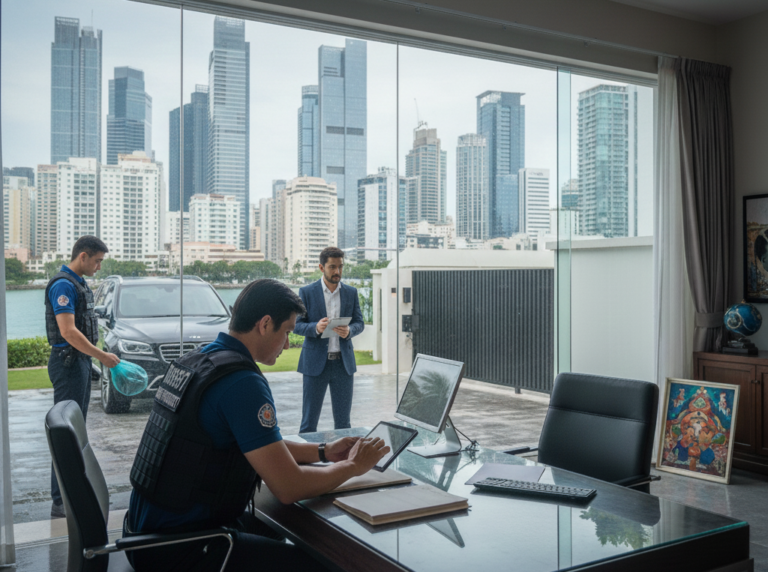
When you win a case in a Thai court, the judgment itself does not automatically guarantee payment. In most situations, the winning party (the creditor) must take additional legal steps to locate the debtor’s assets and enforce the judgment through the courts.
This guide explains the asset investigation process, enforcement methods, timelines, fees, and creditor rights under Thai law, written clearly for foreigners and businesses seeking to enforce a Thai court judgment.
What Is Asset Investigation in Thailand?
Asset investigation (also called asset search) is the legal process of identifying the debtor’s property that can be seized or attached after a court judgment.
Thai law allows creditors to collect information on:
- Bank accounts
- Land and real estate
- Condominiums
- Vehicles (cars, motorcycles, trucks)
- Business ownership and shares
- Income sources
- Workplace or employer
- Movable property
Asset investigation is usually performed after a creditor obtains a final judgment, but it can also be requested earlier if needed for provisional measures.
Legal Basis for Judgment Enforcement in Thailand
Thai judgment enforcement is governed by:
- Civil Procedure Code (CPC) – Sections on seizure, attachment, and execution
- Regulations of the Legal Execution Department (LED)
- Ministerial Regulations on Enforcement Procedures
The Legal Execution Department (LED) is the primary government body responsible for enforcing court judgments in Thailand.
Step-by-Step: Enforcement Procedure After a Thai Court Judgment
Below is a clear breakdown of the full enforcement process.
1. Obtain a Final Judgment
A case becomes “final” when:
- No appeal is filed within the time limit, or
- The appeal process is completed
Only then can creditors begin the enforcement process at the LED.
2. Conduct an Asset Investigation
Creditors may:
- Hire lawyers to perform asset searches
- Request data from public sources
- Submit petitions to relevant authorities
Typical investigations include:
Land & Condominium Search
Check the debtor’s name in the Land Office system.
Vehicle Registration Search
Search via the Department of Land Transport (DLT).
Business Ownership Search
Check company shares or director positions via DBD.
Bank Account Search
Lawyers cannot directly check bank accounts,
but once enforcement begins, the LED can send orders to banks to freeze accounts.
3. File an Application for Execution (คำขอบังคับคดี)
Your lawyer submits enforcement documents to the LED, including:
- Court judgment
- Certified copy of decision
- ID/Company documents of creditor
- Power of attorney (if applicable)
Once accepted, the LED opens an “execution case” and assigns an officer.
4. The LED Issues a Seizure or Attachment Order
A. Seizure of Immovable Property
Used for:
- Land
- Houses
- Condominiums
- Buildings
LED officers:
- Go to the property
- Take photos
- Confirm location
- Record valuation
- Begin the auction process
B. Attachment of Movable Property
Used for:
- Vehicles
- Bank accounts
- Company shares
- Salary or wages
- Equipment or machinery
For bank accounts, the LED sends official notices to freeze and transfer funds.
5. Public Auction (If Required)
If the debtor cannot pay, seized properties may be sold by auction.
The proceeds go to:
- LED administrative costs
- Creditor
- Remaining balance returned to the debtor (if any)
6. Receive Payment from Enforcement
After auction or account transfer, the LED distributes funds to the creditor.
This completes the enforcement stage.
How Long Does Enforcement Take in Thailand?
Timeframe depends on the debtor’s assets:
| Type of Asset | Estimated Timeline |
|---|---|
| Bank account attachment | 1–3 months |
| Vehicle seizure | 2–4 months |
| Land/condo seizure & auction | 6–18 months |
| Salary attachment | Monthly installments |
Cases where the debtor hides assets, transfers assets, or refuses cooperation may take longer.
Common Problems Creditors Face
Many creditors ask:
“Why can’t lawyers check bank accounts immediately?”
Because Thai law requires bank attachment only through LED authority.
“What if the debtor transfers property to someone else?”
Your lawyer may:
- File a fraudulent transfer claim
- Request injunctions
- Argue bad-faith transfer
“What if the debtor disappears?”
Lawyers can:
- Search through employer or workplace
- Investigate vehicle ownership
- Conduct litigation for concealment
Why Asset Investigation Is Important Before Enforcement
Many creditors start enforcement without knowing what assets exist — causing delays and unnecessary legal costs.
Proper investigation provides:
Faster enforcement
Clear target assets
Higher success rate
Lower legal fees
More leverage in negotiations
Examples
Example 1: Unpaid Loan Judgment
Creditor wins a 500,000 THB case.
Investigation finds:
- 1 bank account
- 1 car
- Employment income
Result:
Freeze bank account + attach car → paid within 2 months.
Example 2: Contract Breach Judgment
Debtor refuses to pay 1.2M THB.
Investigation finds:
- 1 condominium
- Company shares worth 200,000 THB
Result:
Condo seized → Auction → Creditor receives full amount
FAQ — Asset Enforcement in Thailand
1. Can foreigners enforce a Thai court judgment?
Yes. Foreigners have full rights to enforce judgments in Thailand.
2. Can a Thai judgment be enforced abroad?
Generally requires a new lawsuit in the foreign country.
3. What if the debtor lives overseas?
Asset search will focus on assets located in Thailand.
4. Does the LED charge fees?
Small administrative fees apply but are often charged to the debtor later.
5. Do I need a lawyer?
Highly recommended — the process is complex and technical.
Need Help With Asset Investigation or Enforcement in Thailand?
Let Lex Bangkok support you with a clear, strategic plan.
We assist with:
– Full asset investigation (land, condo, banks, vehicles)
– Filing enforcement applications with LED
– Seizure & attachment of assets
– Judgment execution for foreigners & businesses
Contact us: info@lexbangkok.com