

EN中文
More than land and machinery. We pair licensed Thai engineers with 30+ years of experience and our legal team to deliver the Factory Operation License (Ror Ngor 4) — compliant from day one.
Licensed Thai engineers, 30+ yrs
Estates & standalone sites
Feasibility → production readiness
Establishing a factory in Thailand involves more than finding land and buying machinery. Investors must comply with Thai industrial, environmental and safety regulations — and, in many cases, obtain a Factory Operation License (Ror Ngor 4) before starting operations.
At Lex Bangkok, we work in close cooperation with our trusted partners — licensed Thai engineers with more than 30 years of experience — to provide one-stop support for foreign and local clients setting up or expanding factory operations in Thailand.
Our integrated team combines legal, regulatory and engineering know-how so your project is compliant from day one and structured for long-term growth.
The Thai Factory Act B.E. 2535 (1992) sets out the core framework for factory establishment, expansion and operation in Thailand. It covers issues such as licensing, safety, pollution control and government supervision, and is administered mainly by the Department of Industrial Works under the Ministry of Industry.
Under this law, a “factory” generally means premises where machinery of at least a certain total horsepower, or a specified number of workers, are used for activities such as producing, assembling, packing, repairing, storing or destroying goods that fall under listed industrial categories. Not every site meeting this definition requires a license — some only need to notify the authorities, while others must obtain full approval before operations can begin.

Ministerial regulations divide factories into three broad categories. The first step is always confirming which one your project falls into.
These factories may start operating after submitting a notification and receiving acknowledgement from the authorities.
Certain smaller-scale factories, or those specified in ministerial rules, may operate under lighter regulatory requirements.
Larger factories exceeding thresholds for machinery power and number of employees must obtain a license from the Department of Industrial Works before commencing operations. In some cases, operators may start construction on a preliminary certificate while the full license is still under consideration.
For factories in the third category, operators must usually inform officials before test runs and again before full commercial operation begins, following the relevant ministerial procedures.
If your project falls into the category requiring a license, a Ror Ngor 4 factory license is a legal prerequisite to operate. Without it, the business can face orders to suspend operations, fines, or other enforcement measures. In practice, the licensing process typically involve
Because technical, environmental and legal issues are all connected, it is usually more efficient — and less risky — to handle everything through a coordinated team of lawyers and licensed engineers.
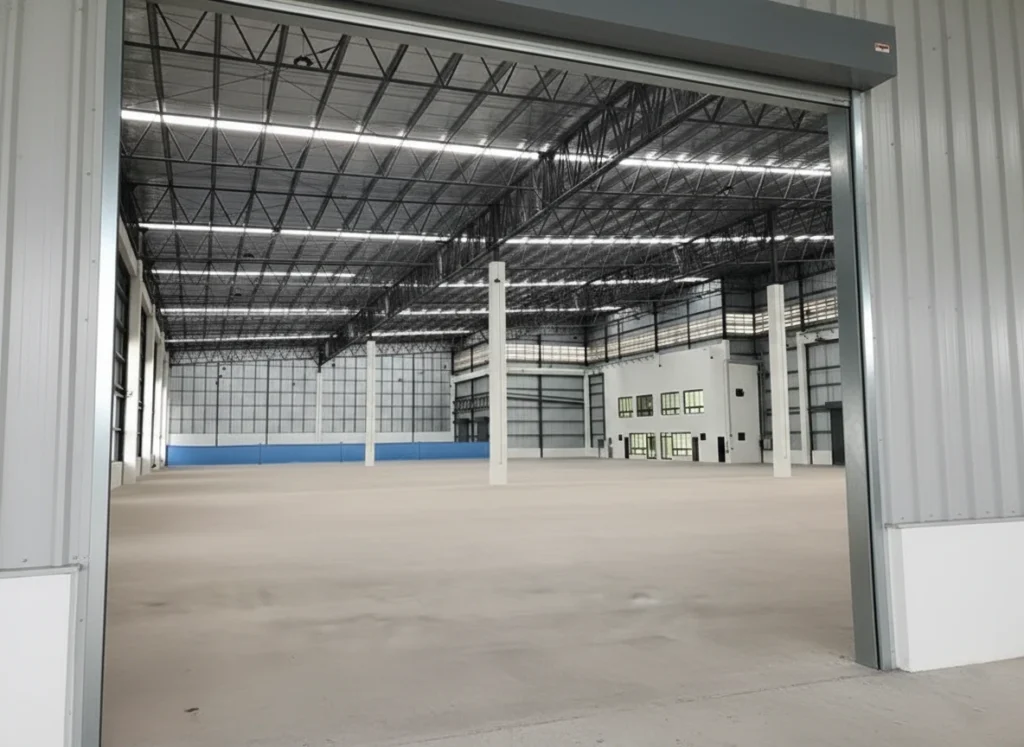
We assist with the full factory license Thailand process, including
Many investors prefer to locate factories inside a Thai industrial estate, where zoning, utilities and infrastructure are already designed for industrial activities. Estates may be operated by the Industrial Estate Authority of Thailand or private developers, each with its own rules. We support you with
This helps ensure you understand exactly what you can do within the estate and what ongoing obligations apply to your project.
A typical Ror Ngor 4 application must include a factory layout / site plan showing buildings, production lines, utilities, access ways, storage areas and safety systems; a machinery list indicating the type, power and capacity of all major machines; and plans for waste treatment, hazard control and pollution prevention. Together with our engineering partners, we can
All plans and lists are prepared or reviewed by properly licensed Thai engineers with extensive industrial experience.
For investors who prefer a turnkey factory solution, we coordinate EPC management through our network of trusted contractors. Our involvement may include
You remain in control of major decisions while we help align the legal, technical and contractual aspects of the project.
Before committing to a major investment, a factory feasibility study helps determine whether the project is commercially, technically and legally viable. Working closely with our engineering partners, we support feasibility assessments that typically cover
This gives decision-makers a clearer view of risks, timelines and key go/no-go points.
While the exact list depends on your project, a factory license application commonly involves the following. We help coordinate the legal and technical documents so they are consistent and ready for submission.
Confirm category & licensing path
Officer visits site & reports
File before expiry, stay compliant
Once your application is submitted, a government officer typically visits the site to inspect the factory area, equipment and pollution-control systems. A report is then prepared and forwarded to the relevant industrial office. There is a statutory timeframe for the authorities to consider the application and issue a decision, although additional questions or required revisions can extend the process.
A Category 3 factory licence issued today does not expire. The Factory Act (No. 2) B.E. 2562 (2019) repealed sections 14 and 15 of the Factory Act B.E. 2535 (1992) — the provisions that fixed the licence term at five calendar years and set out the renewal procedure. Since that amendment came into force on 27 October 2019 there is no renewal application and no expiry date on the licence.
What replaced renewal is an annual obligation, not an annual application
We can track the annual fee and Form Ror Ngor 9 deadlines with you, and handle licence amendments when machinery, process or factory area changes.
A factory license in Thailand is the Ror Ngor 4 permit issued under the Factory Act B.E. 2535 (1992), as amended by the Factory Act (No. 2) B.E. 2562 (2019). It authorises a Category 3 factory to operate. Premises using machinery of 50 horsepower or more, or employing 50 or more workers, fall inside the Act and need it.
Two numbers decide almost everything. The 2019 amendment raised the definition of a factory from 5 horsepower or 7 workers to 50 horsepower or 50 workers, taking a large band of smaller plants out of the Act entirely. It also abolished the five-year license renewal, so a license now runs until the operator ceases the business.
Clients often speak of the factory license as a single document. In practice three instruments carry different consequences, and confusing them causes real delay on a transaction.
| Instrument | What it is | When it bites |
|---|---|---|
| Ror Ngor 3 | The application to establish or expand a factory | Before construction or installation of machinery |
| Ror Ngor 4 | The operating license itself | Before production begins; now indefinite in duration |
| Ror Ngor 5 | Transfer, lease or change of the license holder | On an asset purchase, a lease of the plant, or a change of operator |
Category 3 factories need a Ror Ngor 4 before operating. Those in Category 2 must notify the authority before starting. A Category 1 factory may operate without either. Since October 2019 the categories only apply to premises that meet the 50 horsepower or 50 worker definition, so smaller plants now sit outside the Act altogether.
That last sentence is where foreign manufacturers get hurt, because falling outside the Factory Act is not the same as being unregulated.
A plant below both thresholds needs no Ror Ngor 4. It remains subject to the Public Health Act, to local authority ordinances governing nuisance-causing activities, and to building control. Those permits are issued by the district or municipal office rather than by the Department of Industrial Works, and they are easy to miss because nobody in the project team is looking at local regulation.
Worse, the threshold is a live test rather than a one-off classification. Installing an additional compressor, or hiring your fiftieth employee, converts the premises into a factory. From that moment the site is operating a Category 3 activity without the license it now requires. Growth plans, in other words, carry a licensing trigger, and the trigger is a headcount number sitting in an HR spreadsheet.
How long an application takes depends on the scale and type of the project, the completeness of the documents, the site inspection and the authority’s review. Environmental approval, where a report is required, and building permits sit ahead of the license, not alongside it.
The 2019 amendment authorised qualified, licensed private inspectors to carry out machinery and factory inspections.
The filing pack is technical rather than legal, and the technical documents are where applications stall. Assemble the following before filing, because the authority treats an incomplete submission as not yet filed.
Before 2019 a factory license expired after five years. Renewal was a scheduled moment when somebody re-read the conditions, checked the installed plant against the approved machine list, and corrected drift. The amendment removed the expiry date, and with it that recurring review.
The underlying obligations did not change. Expanding a factory, installing machinery beyond the approved capacity, or changing the factory type still requires prior approval. Annual fees remain payable. Operating conditions attached to the license remain binding. What disappeared was the calendar entry that forced anyone to look.
Consequently the failure mode has shifted. Plants rarely operate on an expired license now. They operate on a valid license that no longer describes the plant, having added a line, uprated a motor or changed a raw material without approval. On inspection, or in due diligence during a sale, that gap surfaces as an unapproved expansion.
Foreign manufacturers routinely assume that a factory license and a foreign business license are the same conversation. They are not. General manufacturing does not appear in the Foreign Business Act's restricted Lists, so a foreign-owned company may usually manufacture without a foreign business license at all.
The restriction bites on what sits around the factory. Wholesale and retail distribution below the capital thresholds, most service activities, and several trading arrangements do fall within List Three. So the operating company frequently needs one instrument for the plant and another for the commercial activity beside it. Our service page on the foreign business license in Thailand deals with that second workstream.
Land is the other divide. A foreign-majority company cannot ordinarily own industrial land, which is why promotion under the Investment Promotion Act matters beyond its tax incentives: it can carry the right to own land for the promoted activity. Estate tenancy achieves a similar result by lease.
| Question | Instrument that answers it |
|---|---|
| May this plant operate? | Factory license, Ror Ngor 4 |
| May a foreigner carry on this activity? | Foreign Business Act license, certificate, or no restriction for manufacturing |
| May the company own the land? | BOI promotion, industrial estate tenancy, or a lease |
| May construction begin? | Environmental approval, then the building permit |
| May the machinery be imported at relief? | BOI promotion or free zone status |
Five failure modes account for most of the delay we see, and each has a preventable cause.
We act for foreign manufacturers establishing production in Thailand, and for buyers acquiring existing plants. Our industrial team pairs lawyers with licensed engineers, so the technical filings and the legal conditions are prepared together rather than handed between advisers.
Where the project also needs foreign business approval, BOI promotion or environmental consent, we sequence those workstreams against the licensing critical path. Buyers of existing facilities should also read our note on buying a factory in Thailand, and operators facing enforcement our guide to Factory Act compliance and penalties.
We will classify your activity, confirm whether a Ror Ngor 4 is required, and set out how licensing sequences against environmental approval, land and foreign ownership. Related reading: environmental permits and EIA approval and Factory Act compliance and enforcement.
Schedule a ConsultationThai regulations require factories to operate safely and minimize environmental impact. Depending on the type and scale of factory, key obligations may include the following. Our role is to help you understand the regulatory framework and coordinate with licensed engineers and environmental consultants so your factory design and operations are aligned with Thai standards.
Proper treatment and discharge of wastewater, control of air emissions and solid waste management.
Systems to manage hazardous substances and reduce the risk of leaks, spills or accidents.
For certain projects considered to have significant environmental impact, an EIA may be required before approval.
Fire protection systems, emergency exits, evacuation plans and regular staff training.
We coordinate lawyers and licensed Thai engineers (30+ years) so your factory project is reviewed from both legal and technical angles.
We explain Thai regulations in clear, practical English and help bridge communication with local authorities and industrial estates.
Early integration of factory layout, machinery, environmental and licensing strategy significantly reduces delays, redesign costs and compliance risks later.
From feasibility and site selection to Ror Ngor 4 licensing, EPC coordination and ongoing regulatory compliance, we accompany your project through its full lifecycle.
Factories that exceed specified thresholds for machinery power and number of employees, and that fall into certain industrial categories, must obtain a Ror Ngor 4 license before starting operations. Whether your project meets these criteria depends on your industry, process and scale, so it should be checked case by case.
If documents, factory plans and environmental measures are complete and clear, the authorities are expected to inspect the site and issue a decision within legally prescribed timeframes. In practice, additional questions, document revisions or environmental reviews can extend the process.
It does not expire. The Factory Act (No. 2) B.E. 2562 (2019) repealed the five-year term and the renewal procedure, with effect from 27 October 2019. What remains is the annual operating fee under section 43 and the annual operating data return on Form Ror Ngor 9.
No. Many licensed factories are located outside industrial estates. However, industrial estates can simplify infrastructure, utilities and certain zoning issues. Whether an estate or a standalone site is better depends on your industry, logistics, cost profile and long-term strategy.
Authorities rely on technical documents — such as layout plans, machinery lists and safety systems — to assess compliance with the Factory Act and environmental and safety regulations. These documents are usually required to be prepared or certified by licensed engineers, who are responsible for the accuracy of the technical information.
Important: The information on this page is for general guidance only and does not constitute legal advice. Each project must be assessed on its specific facts, and you should consult a qualified Thai lawyer before making decisions.
1-Stop Service
We coordinate licensed Thai engineering partners (30+ years’ experience) with our legal team to move your project forward with clarity, compliance and confidence. You are welcome to contact Lex Bangkok for an initial discussion.
Industrial Regulatory Experience
THB 1BN+
Manufacturing project
Advising an international chemical manufacturer on the regulatory and licensing workstream for the expansion of a manufacturing facility in Thailand.
7,500+ HP
Machinery
Regulatory coordination involving factory licensing, machinery, production processes, environmental systems and engineering documentation.
Legal + Engineering
Combined team
Thai regulatory counsel working alongside licensed industrial, environmental and civil engineers.