

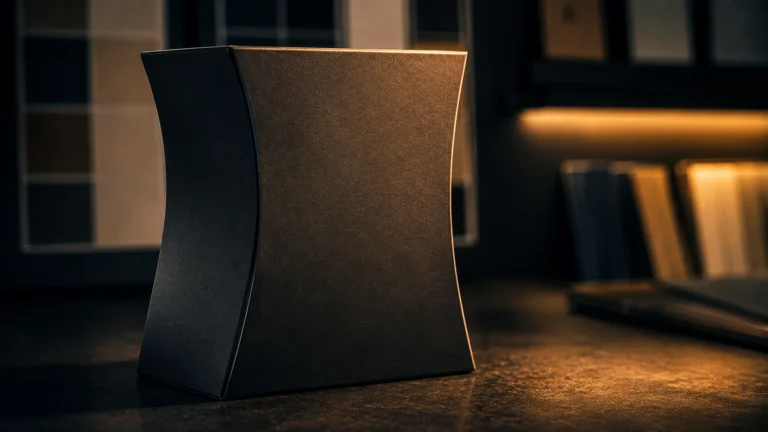
Why Packaging Design Protection in Thailand Matters
Thailand is one of Southeast Asia’s largest consumer markets, and its packaging sector is growing quickly. As competition intensifies, look-alike products, copycat bottles, and imitation labels have become a routine commercial threat. A distinctive package builds recognition and pricing power; a copied one erodes both.
However, packaging sits awkwardly across several areas of intellectual property law. A single carton may combine a brand name, a logo, a graphic illustration, a colour scheme, and a three-dimensional shape. Each of those elements enjoys protection — if at all — under a different statute. Therefore, brand owners who assume that one registration covers everything are frequently exposed. The practical goal is to build overlapping layers of protection so that, if one route fails, another still stands.
The Four Legal Routes at a Glance
Before examining each tool in detail, it helps to see how they compare. The table below summarises the four principal routes and what each one realistically protects.
| Route | What it protects | Registration | Term |
|---|---|---|---|
| Trademark (incl. shape marks) | Names, logos, distinctive get-up, and product or container shapes that identify source | Required to obtain full statutory rights | 10 years, renewable indefinitely |
| Design patent | The new external appearance of a product or its packaging (shape, pattern, ornamentation) | Required; must be filed before disclosure | 10 years from filing, non-renewable |
| Copyright | Original artwork, illustrations, and graphic elements on the package | Automatic; voluntary recordation available | Generally life plus 50 years (25 years for works of applied art) |
| Unfair competition / passing off | Reputation and goodwill against misleading imitation, even without registration | None | While goodwill subsists |
Route 1: Trademarks for Get-Up and Product Shapes
Trademarks are the backbone of packaging design protection in Thailand. The Trademark Act B.E. 2534 (1991), as amended, protects not only word marks and logos but also the distinctive “get-up” of a package and, in principle, the three-dimensional shape of a product or its container.
Two-dimensional get-up
The graphic layout of a label — its arrangement of colours, devices, and stylised elements — can be registered as a device or composite mark. This is usually the most reliable way to lock down a recognisable package. As a result, brand owners should register the full label artwork as a trademark, not just the brand name in plain letters.
Three-dimensional shape marks
Since the 2016 amendments, Thailand recognises shape marks. Under Section 7 of the Trademark Act, a shape is distinctive only if it is not the natural form of the goods and is not necessary to obtain a technical result. In practice, the Department of Intellectual Property (DIP) applies this test conservatively. A plain bottle or a purely functional container is therefore difficult to register on inherent grounds.
Where a shape is not inherently distinctive, the applicant may still succeed by proving acquired distinctiveness — that consumers have come to recognise the shape as a badge of origin through extensive sales and advertising. However, that evidentiary burden is heavy, and it is hardest for new entrants whose packaging has not yet built market recognition.
Route 2: Design Patents for Packaging Appearance
A design patent protects the ornamental appearance of a product or its packaging — the shape, configuration, pattern, or composition of lines and colours that gives it a special look. Under the Patent Act B.E. 2522 (1979), a registrable design must be new and capable of industrial application.
The novelty requirement is strict and unforgiving. The applicant must not have disclosed the design to the public — in Thailand or abroad — before the filing date. Consequently, timing is critical: a brand that launches or publishes its new packaging before filing may destroy its own novelty and lose the right to a design patent. Foreign brands should therefore file in Thailand before any public release, ideally claiming priority from an earlier home-country application.
A Thai design patent runs for ten years from the filing date and cannot be renewed. It is a powerful complement to trademark protection because it can cover a distinctive shape that is too functional or too new to qualify as a shape mark. For fast-moving consumer products with a limited commercial life, a ten-year design monopoly is often more than enough.
Route 3: Copyright in Label and Package Artwork
Copyright protection in Thailand offers immediate, no-cost protection for the creative elements of a package. Under the Copyright Act B.E. 2537 (1994), the law protects original artistic works — including illustrations, graphic designs, and stylised label artwork — automatically from the moment of creation. No registration is required.
Copyright does not protect a functional shape or a general concept. Instead, it protects the specific original expression: the drawing on the box, the illustration on the wrapper, the bespoke graphic composition. Because protection arises automatically, copyright often becomes the fastest weapon against a blatant copyist who has lifted the artwork itself.
The term of protection generally runs for the life of the author plus 50 years. However, where the artwork qualifies as a work of applied art, the term is 25 years from creation or first publication. Although registration is not required, brand owners can record their works with the DIP to create useful documentary evidence of ownership and creation date. That record can be decisive when a dispute turns on who created the design first.
Route 4: Unfair Competition and Passing Off
Even without a registration, Thai law provides remedies against a competitor who deliberately imitates a package to mislead consumers. This safety net draws on several sources.
- The Trademark Act: Section 46 preserves the right of an unregistered mark owner to bring a passing-off action against another party using a confusingly similar mark or get-up.
- The Civil and Commercial Code: Sections 420 and 421 allow a claim for a wrongful act where imitation causes damage to a business.
- The Trade Competition Act B.E. 2560 (2017): This law addresses unfair trade practices between businesses, which can include certain deceptive or predatory imitation conduct.
These remedies are useful, but they are harder to prove than an infringement of a registered right. The claimant must establish reputation, likely consumer confusion, and damage. For that reason, passing off is best treated as a backstop — not a substitute for timely registration. The Central Intellectual Property and International Trade (IP&IT) Court hears most of these disputes and can grant injunctions and damages.
The Minimalist Packaging Paradox
Sustainability is reshaping packaging across Thailand. Brands are stripping away wrap-around labels in favour of embossing, laser printing, QR codes, and clean, label-light designs. Ironically, the more minimalist the packaging, the harder it becomes to protect.
The reason is structural. Trademark law rewards distinctive elements, and design patent law rewards novel appearance — yet minimalist packaging deliberately removes the very features that examiners look for. A plain, unbranded bottle rarely reads as a source identifier, and a pared-back design often resembles many competitors. Therefore, eco-conscious brands face a genuine tension between their sustainability goals and their ability to defend their look.
The response is not to abandon minimalism but to protect it strategically. Brands can build distinctiveness into subtle but consistent cues — a signature contour, an embossed motif, a proprietary colour applied consistently — and then document their use to support an acquired-distinctiveness case over time. Filing a design patent for a genuinely novel minimalist form, before any public launch, also remains an option.
A Practical Protection Strategy for Foreign Brands
Because no single tool covers a whole package, the most resilient approach is layered. A well-advised brand entering Thailand typically works through the following sequence.
- File before you launch. Design patents depend on novelty, so file for any distinctive new shape before the packaging is disclosed to the public.
- Register the get-up. Secure the label artwork and any composite mark as a trademark, and pursue a shape mark where the container is genuinely distinctive.
- Lock down copyright ownership. Ensure your written agreements assign the copyright in all artwork to your company, not the freelance designer or agency.
- Keep evidence. Retain dated design files, sales figures, and advertising records to support acquired distinctiveness and passing-off claims later.
- Monitor and enforce. Watch the market for look-alikes and act early, using the IP&IT Court and Customs recordal where appropriate.
Above all, treat packaging design protection in Thailand as a portfolio, not a single filing. The brands that win are the ones that combine registrations with disciplined evidence-keeping and prompt enforcement.
Registered design rights sit alongside these protections. For the filing rules, drawing requirements and deadlines that apply, see our guide to the design patent in Thailand.
Frequently Asked Questions
Can I protect the shape of my bottle or container in Thailand?
Do I need to register anything to have copyright in my label artwork?
How long does packaging protection last in Thailand?
Enforcement, Timing, and Minimalist Designs
What happens if a competitor copies my packaging but I never registered it?
Why is minimalist or eco-friendly packaging harder to protect?
Should a foreign brand file for protection before entering the Thai market?
Protect Your Brand’s Look in Thailand
Lex Bangkok advises international brands and investors on building layered trademark, design, and copyright protection for their products and packaging — and on enforcing those rights when copycats appear. Speak with our intellectual property team about a protection strategy tailored to your business.
Schedule a ConsultationRelated reading: IP enforcement in Thailand after the Thailand-China pact.