

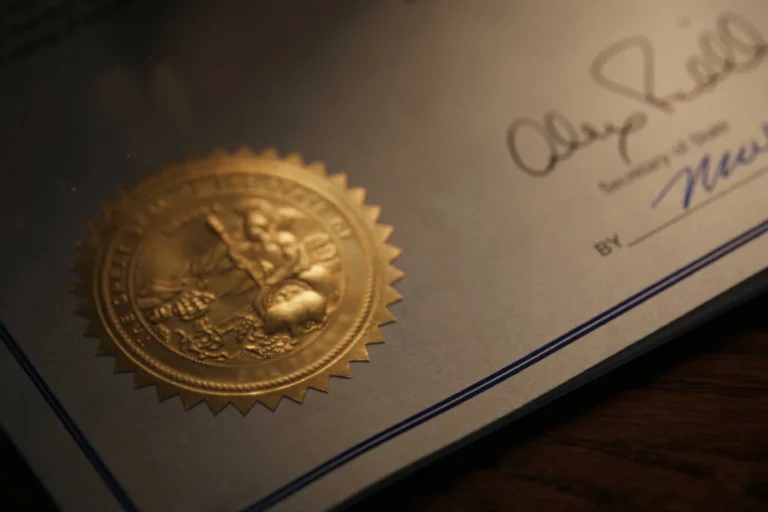
The apostille convention Thailand accession will transform how the country verifies official documents for international use. On 9 December 2025, the Thai Cabinet approved formal entry into the Hague Convention Abolishing the Requirement of Legalisation for Foreign Public Documents. Most people know this treaty as the Apostille Convention. For businesses, expatriates, and legal professionals who handle cross-border document authentication in Thailand, this marks a landmark development.
Anyone registering a company in Thailand, obtaining work permits, or handling international contracts will benefit. The shift from consular legalisation to a streamlined apostille system will save both time and money.
What Is the Apostille Convention in Thailand?
The Apostille Convention is an international treaty. The Hague Conference on Private International Law (HCCH) administers it. Established in 1961, the convention simplifies how member countries authenticate public documents. Instead of navigating a lengthy chain of government offices and foreign embassies, a single apostille certificate confirms that a document is genuine.
Today, 128 countries participate in the convention. Thailand’s decision to join this framework aligns the country with global best practices. It also strengthens confidence in Thai documents abroad.
How Document Legalisation Currently Works in Thailand
Right now, anyone who needs a Thai document recognised overseas must go through consular legalisation. This multi-step process starts at the issuing authority. It then moves to the Ministry of Foreign Affairs (MFA) for authentication. Finally, the relevant foreign embassy or consulate must verify the document.
This process often takes weeks. It adds significant costs, especially for businesses managing large volumes of cross-border paperwork. For individuals seeking certified translations or notarised documents, the delays can disrupt important timelines.
What Changes Under the Apostille Convention in Thailand
Once Thailand fully implements the apostille convention, a single certificate will replace the entire consular legalisation chain. A designated Thai authority will issue an apostille. Any receiving country that belongs to the convention will then accept that apostille as proof of authenticity.
This single-step process eliminates embassy visits. It reduces processing times from weeks to days. Businesses and individuals will enjoy lower costs and faster turnaround for all cross-border document needs.
Documents Covered by the Apostille Convention
The convention covers a wide range of public documents. These include:
- Court documents and judgments
- Administrative documents such as birth, marriage, and death certificates
- Notarial acts and certified copies
- Official certificates placed on private documents, such as registration endorsements or visa stamps
The convention does not cover diplomatic or consular documents. It also excludes papers directly related to commercial or customs transactions.
Thailand’s Apostille Convention Timeline
Thailand’s path toward the apostille convention has been gradual but deliberate. In March 2021, Thailand officially joined the HCCH as a member state. This laid the groundwork for accession to various Hague conventions.
In September 2024, the Department of Treaties and Legal Affairs hosted a side event on the Apostille Convention. This took place during the 62nd Annual Session of the Asian-African Legal Consultative Organization (AALCO) in Bangkok. The event signalled the government’s growing commitment to this reform.
The 9 December 2025 cabinet resolution stands as the most significant milestone to date. A Sub-committee chaired by Ambassador Vilawan Mangklatanakul oversees the accession process. This body operates under the National Committee on Implementation of Thailand’s HCCH Membership, which the Minister of Justice chairs.
After Thailand deposits its instrument of accession, the convention will enter into force approximately six to eight months later. A designated competent authority in the receiving country will then accept the apostille.
Impact of the Apostille Convention on Businesses in Thailand
For companies operating across borders, the apostille convention brings major advantages. Businesses that regularly submit contracts, powers of attorney, or corporate documents to foreign authorities will see faster processing. They will also spend less on legalisation fees.
Foreign companies looking to set up operations in Thailand will also benefit. The simplified verification process encourages more international investment. It reduces one of the key bureaucratic barriers to doing business in the region.
Implications for Expatriates and Individuals
Expatriates living in Thailand often need to legalise personal documents. These include marriage certificates, educational qualifications, and powers of attorney. The apostille convention will make this process much simpler.
Instead of visiting multiple offices, individuals will obtain a single apostille. Anyone applying for work permits or visas in Thailand will find the document requirements easier to meet. The convention removes several layers of bureaucracy that currently slow down these applications.
Challenges Ahead for Implementation
The cabinet approval marks a major step forward. However, Thailand still faces implementation challenges. One notable issue is that Thailand does not have a formal notary public system similar to those in many Western countries. This complicates the task of designating competent authorities to issue apostilles.
The MFA must coordinate with the Ministry of Justice, the Ministry of Interior, and other agencies. Together, they need to establish clear procedures for apostille issuance. Training programmes and public awareness campaigns will also help ensure smooth adoption by government officials and the general public.
How Lex Bangkok Can Help
Thailand’s evolving legal landscape requires experienced guidance. Whether you need help with document legalisation and authentication, company registration, or certified translation services, our team at Lex Bangkok stands ready to assist. We help you stay ahead of these regulatory changes.
As Thailand prepares to join the apostille convention, early preparation matters. Contact our team today to discuss how the upcoming changes affect your documents and business operations.
Need Help With Document Legalisation in Thailand?
Our legal experts at Lex Bangkok guide you through every step of apostille convention compliance and cross-border document authentication.