

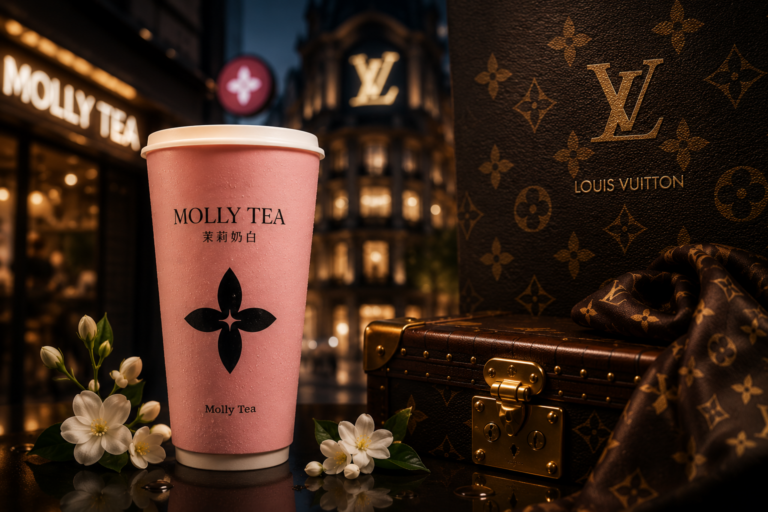
A four-petal flower has become one of the most expensive design choices in the beverage industry. In the Louis Vuitton Molly Tea case, the Suzhou Intermediate People’s Court ordered the fast-growing Chinese bubble tea chain to pay RMB 10.3 million (about USD 1.5 million) for infringing seven of Louis Vuitton’s registered Monogram flower trademarks. Molly Tea has announced it will appeal. Here is where the dispute stands — and why it matters for brand owners far beyond China.
Inside the Louis Vuitton Molly Tea Ruling
On July 1, 2026, the court delivered its first-instance judgment in case (2025) Su 05 Min Chu No. 617, filed in May 2025. It held that Shenzhen Molly Tea Catering Management Co. and a franchise store in Suzhou infringed seven registered four-petal flower marks that form part of Louis Vuitton’s Monogram pattern. The key orders are summarized below.
| Order | Detail |
|---|---|
| Damages | RMB 10 million in economic losses, payable within 10 days of the judgment taking effect |
| Costs | RMB 300,000 in rights-protection expenses, plus roughly RMB 295,800 in litigation and preservation fees |
| Injunction | Immediate cessation of the infringing use; the franchise store bears joint liability up to RMB 100,000 |
| Public correction | Statements to eliminate the impact must be published on Molly Tea’s website, Weibo, WeChat, Xiaohongshu, and Douyin |
Notably, court reporting indicates that Molly Tea’s own four-petal flower trademark applications had previously been rejected or invalidated, yet the chain continued using the motif across its 2,400-plus stores.
The Appeal: What Happens Next
Molly Tea confirmed through its founder, Zhang Bocheng, that it will appeal the ruling. Consequently, the judgment is not yet final, and the damages award could still change. The company argues the motif draws on traditional Chinese patterns, including the Tang-dynasty baoxiang flower — a defense that captured public attention after the case drew more than 350 million views on Weibo.
The appeal will test a question courts around the world keep confronting: how far the protection of a famous mark extends against a similar — not identical — device used in a completely different industry. Tea and luxury leather goods do not compete. However, well-known marks enjoy broader protection precisely because their distinctiveness, not just their sales, is what the law shields.
Why the Louis Vuitton Molly Tea Case Matters in Thailand
Thailand, like China, is a first-to-file jurisdiction, and Thai law extends special protection to well-known marks under the Trademark Act. A foreign or local business launching a brand here cannot assume that operating in a different sector keeps it safe from a famous mark’s owner. Moreover, the cost pattern in this case is typical: clearance searches and registration cost a fraction of litigation, rebranding, and destroyed goodwill.
For businesses building or importing a brand into Thailand, three steps follow directly from this dispute. First, run a proper clearance search before finalizing any logo — as our guide to trademark registration in Thailand explains, the first filer generally wins. Second, treat rejected trademark applications as a warning, not a formality; continuing to use a refused mark invites exactly the outcome Molly Tea now faces. Third, watch how Thai courts handle similar fights — the recent Apple v. Gelius decision shows Thai judges engaging in the same well-known-mark analysis, and luxury houses entering the market, as covered in our luxury retail market-entry guide, police their marks here just as aggressively.
Reference materials on well-known mark protection are available from the Department of Intellectual Property and WIPO.
Final Word
Whether the award survives appeal or not, the Louis Vuitton Molly Tea case has already delivered its lesson: a logo is a legal asset before it is a marketing asset. Businesses that clear and register early rarely make this kind of headline.
For a broader look at how Thai courts treat bad-faith registrations, see our guide to trademark squatting in Thailand.
Protect Your Brand Before It Becomes a Dispute
Lex Bangkok advises international brands, franchisors, and startups on trademark clearance, registration, and enforcement in Thailand. Speak with our team before you commit to a logo — not after a demand letter arrives.
Schedule a ConsultationThis article is for general informational purposes only and does not constitute legal advice. It is based on publicly reported information; the judgment is under appeal and the final outcome may change.