

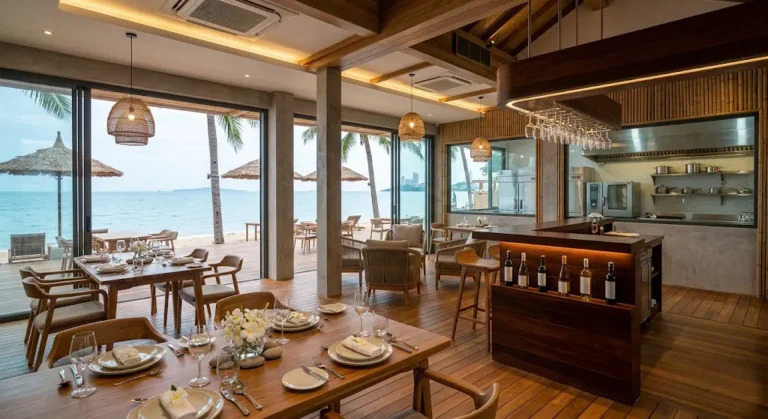
If you are planning to open a restaurant in Pattaya as a foreigner, understanding Thailand’s legal framework is the first step toward building a successful food business. Pattaya is one of the country’s most visited coastal cities, attracting millions of international tourists and a growing community of expatriates every year. The demand for diverse dining experiences continues to rise, making the restaurant industry an attractive investment opportunity. However, foreign entrepreneurs must navigate a specific set of regulations before they can legally operate. This comprehensive guide explains everything you need to know about the legal requirements, business structures, permits, and compliance steps involved when you open a restaurant Pattaya foreigner investors should be aware of in 2026.
Why Pattaya Is a Prime Location for Foreign Restaurant Investors
Pattaya has transformed from a quiet seaside town into a thriving commercial hub over the past two decades. The city now hosts a permanent population of over 100,000 residents, supplemented by approximately 10 million tourists annually. This diverse and international customer base creates strong demand for restaurants offering a wide range of cuisines, from traditional Thai food to European, Japanese, Middle Eastern, and fusion concepts.
The Eastern Economic Corridor (EEC) initiative has further boosted Pattaya’s economic profile, bringing new infrastructure projects, residential developments, and a growing professional workforce. For anyone looking to open a restaurant Pattaya foreigner entrepreneurs will find a market with relatively lower operating costs compared to Bangkok, combined with high foot traffic in tourist areas along Walking Street, Jomtien Beach, and Central Pattaya.
Legal Business Structures for Foreign Restaurant Owners
Thai law restricts foreign ownership in certain business categories under the Foreign Business Act. The restaurant industry falls under List 3 of restricted businesses, which means foreigners cannot own more than 49 percent of a Thai limited company without obtaining a Foreign Business License. Most foreign restaurant owners in Pattaya choose one of the following structures to comply with regulations.
The most common approach is establishing a Thai Limited Company with majority Thai shareholders. Under this arrangement, Thai nationals hold at least 51 percent of the shares, while the foreign investor retains 49 percent. However, the foreign partner can still maintain operational control through carefully drafted shareholder agreements and management authority provisions. Professional legal services in Thailand are essential to structure these agreements properly and protect your investment.
Another option is to apply for a Foreign Business License (FBL) from the Department of Business Development. This allows the foreign investor to hold majority or full ownership of the company. The FBL application process requires demonstrating minimum capital investment of at least 3 million Thai Baht per business category, along with a detailed business plan and financial projections. If you want to open a restaurant Pattaya foreigner ownership at more than 49 percent, an FBL is the most direct legal path.
A third option involves obtaining a Board of Investment (BOI) promotion, although this route is less common for standalone restaurant operations unless part of a larger hospitality or tourism development project. BOI-promoted businesses can enjoy benefits such as foreign majority ownership and corporate income tax exemptions.
Company Registration Process for Restaurant Businesses
Once you have selected the appropriate business structure, the next step is company registration in Thailand. This process involves several stages that typically take between two and four weeks to complete when handled by experienced professionals.
The registration begins with reserving a company name at the Department of Business Development (DBD). The proposed name must be unique and not similar to any existing registered entity. After name approval, the founders file a Memorandum of Association that specifies the company objectives, registered capital, and shareholder information.
A statutory meeting follows, during which the shareholders approve the company articles of association, appoint directors, and authorize share allotments. The company is then registered with the DBD, and a corporate tax identification number is obtained from the Revenue Department. For restaurant businesses, you will also need to register for Value Added Tax (VAT) if your projected annual revenue exceeds 1.8 million Thai Baht.
Registered capital requirements vary depending on whether the company has foreign shareholders. Companies with foreign directors who need work permits must maintain a minimum registered capital of 2 million Thai Baht per work permit holder. This capital must be fully paid up and verifiable through bank statements.
Essential Permits and Licenses for Operating a Restaurant in Pattaya
Beyond company registration, there are several permits and licenses required before you can legally serve food to customers. Obtaining all necessary approvals is critical for anyone who wants to open a restaurant Pattaya foreigner operators must plan for from the earliest stages of the project.
Food Establishment License: Issued by the local administrative office (in Pattaya’s case, the Pattaya City Hall health department), this license certifies that your restaurant meets food safety and hygiene standards. An inspection of the premises is required before the license is granted. Requirements include proper food storage facilities, clean water supply, waste disposal systems, and adequate ventilation.
Liquor License: If you plan to serve alcoholic beverages, you must obtain a liquor license from the Excise Department. Thailand has strict regulations regarding alcohol sales, including prohibited hours (generally no alcohol sales between 2:00 PM and 5:00 PM, and after midnight). The license application requires your business registration documents, premises lease agreement, and a fee based on the type of establishment.
Tobacco License: Restaurants that sell cigarettes or tobacco products need a separate tobacco retail license from the Excise Department. Note that Thailand has comprehensive smoking bans in enclosed public spaces, and restaurants must comply with designated smoking area regulations.
Entertainment License: If your restaurant concept includes live music, DJ performances, or any form of entertainment, you may need an entertainment venue license under the Entertainment Places Act. This is particularly relevant for establishments in Pattaya’s nightlife areas and carries additional compliance requirements regarding operating hours and safety standards.
Building and Fire Safety Permits: Your restaurant premises must comply with building codes and fire safety regulations. A building use permit from the local authority confirms the space is approved for commercial food service. Fire safety certificates require adequate fire exits, extinguishers, and emergency lighting.
Work Permits and Visa Requirements for Foreign Operators
Foreign nationals who want to open a restaurant Pattaya foreigner entrepreneurs need to secure proper immigration documentation. Working in Thailand without a valid work permit is a criminal offense that can result in fines, detention, and deportation.
The standard path involves obtaining a Non-Immigrant B visa from a Thai embassy or consulate abroad, followed by a work permit application through the Ministry of Labour after arriving in Thailand. The employer company (your registered restaurant business) sponsors the work permit, and you must demonstrate that the company meets the ratio of four Thai employees per one foreign work permit holder.
Work permit processing typically takes two to four weeks. During this period, the applicant must not engage in any work activities. The permit is issued for one year and must be renewed annually. Directors of BOI-promoted companies may benefit from expedited work permit processing through the One Stop Service Center.
It is important to ensure that your employment contract and work permit description accurately reflect your role in the restaurant business. Thai labor law requires that work permit holders only perform the activities specified in their permit. Having a well-drafted employment contract prepared by a qualified contract lawyer protects both the business and the foreign operator.
Lease Agreements and Property Considerations
Foreigners cannot own land in Thailand, so securing an appropriate lease agreement for your restaurant premises is essential. Commercial leases in Pattaya typically run for three years with options to renew. Leases exceeding three years must be registered at the Land Department to be enforceable against third parties.
Key provisions to negotiate in your restaurant lease include the permitted use clause (ensuring the space can be used for food service), renovation and fit-out rights, subletting restrictions, rent escalation terms, and early termination conditions. The Department of Business Development provides general guidance on commercial lease regulations, but having your lease reviewed by a local attorney is strongly recommended.
Location selection in Pattaya should factor in foot traffic patterns, proximity to tourist attractions, parking availability, and zoning regulations. Popular restaurant locations include Central Pattaya Road, Thappraya Road near Jomtien, Soi Buakhao, and the Naklua seafood district. Each area attracts a different customer demographic, so align your concept with the local market.
Tax Obligations and Financial Compliance
Operating a restaurant in Thailand involves several tax obligations that foreign owners must manage carefully. Corporate income tax is assessed at 20 percent of net profits. Small and medium enterprises (SMEs) with paid-up capital not exceeding 5 million Thai Baht may qualify for reduced rates on the first 3 million Baht of net profit.
VAT-registered restaurants must charge 7 percent VAT on food and beverage sales, file monthly VAT returns, and maintain proper tax invoices. Withholding tax applies to various payments including rent, service fees, and contractor payments. Monthly withholding tax returns must be filed with the Revenue Department.
Social Security contributions are mandatory for all employees, with both the employer and employee contributing 5 percent of the employee’s salary (capped at a monthly salary of 15,000 Thai Baht). Foreign employees holding valid work permits are also covered under the Social Security system.
Maintaining accurate financial records and working with a licensed Thai accountant is a legal requirement. Annual financial statements must be audited by a certified public accountant and filed with the DBD within five months of the fiscal year end. The Thailand Revenue Department provides detailed guidance on tax obligations for registered businesses.
Common Mistakes to Avoid When Opening a Restaurant in Pattaya
Many foreign entrepreneurs encounter problems that could have been prevented with proper planning. Using nominee shareholders to circumvent foreign ownership restrictions is illegal and can result in severe penalties including business closure and criminal prosecution. Always structure your company through legitimate legal channels.
Operating without all required permits exposes your business to fines, forced closure, and potential criminal liability. Some restaurant owners begin operations while permits are still pending, which is a risky approach that local authorities in Pattaya actively enforce against.
Underestimating startup costs is another frequent issue. Beyond the initial investment in equipment and renovations, factor in at least six months of operating expenses as working capital. Permit fees, legal costs, accounting setup, and staff recruitment all add up quickly.
Failing to secure proper employment contracts for Thai staff can lead to labor disputes and Department of Labour complaints. Thai labor law strongly favors employees, and severance pay obligations can be substantial for long-term staff members.
Frequently Asked Questions
A foreigner can fully own a restaurant business in Pattaya by obtaining a Foreign Business License (FBL) from the Department of Business Development. Without an FBL, foreign ownership is limited to 49 percent of a Thai limited company. The FBL requires a minimum capital investment of 3 million Thai Baht and a comprehensive business plan.
Total startup costs vary significantly based on the restaurant concept and location. As a general estimate, budget between 2 million and 10 million Thai Baht. This includes company registration (approximately 30,000 to 50,000 Baht), work permit and visa processing (around 40,000 Baht), premises lease deposit (typically three to six months advance rent), renovation and equipment, initial inventory, and six months of working capital.
Essential permits include a Food Establishment License from Pattaya City Hall, a company registration certificate, a tax identification number, VAT registration (if revenue exceeds 1.8 million Baht annually), a work permit for foreign operators, and optionally a liquor license and entertainment license depending on your concept.
The entire process from company registration to opening day typically takes three to six months. Company registration takes two to four weeks, work permit processing requires another two to four weeks, and obtaining food and liquor licenses can take four to eight weeks. Renovation and fit-out timelines depend on the scope of work required for your premises.
If you choose the Thai limited company structure without an FBL, you will need Thai shareholders holding at least 51 percent of the shares. These do not necessarily need to be business partners in the operational sense, but they must be legitimate shareholders with real investment. Using nominee arrangements is illegal. Alternatively, obtaining an FBL allows you to operate without majority Thai ownership.
Related reading: Thailand SIM Card Rules 2026: New NBTC Requirements for Foreigners · Foreign Retail Business in Thailand: How to Open Stores Legally in 2026 · Can Foreigners Buy a Condo in Pattaya? Complete Legal Guide 2026
Ready to Open Your Restaurant in Pattaya?
Launching a restaurant in Pattaya as a foreign investor is an exciting opportunity, but getting the legal foundation right from the start is essential for long-term success. From choosing the right business structure and completing company registration to securing all necessary permits and maintaining tax compliance, every step requires careful attention to Thai regulations. Our experienced team at Lex Bangkok has helped hundreds of foreign entrepreneurs successfully establish food and beverage businesses across Thailand. Contact us today for a consultation and let us handle the legal complexities while you focus on creating an outstanding dining experience.
Venues that add live music, dancing or late-night trading face a further requirement. See our guide to the entertainment license in Thailand for the licensing and inspection rules now being enforced.