

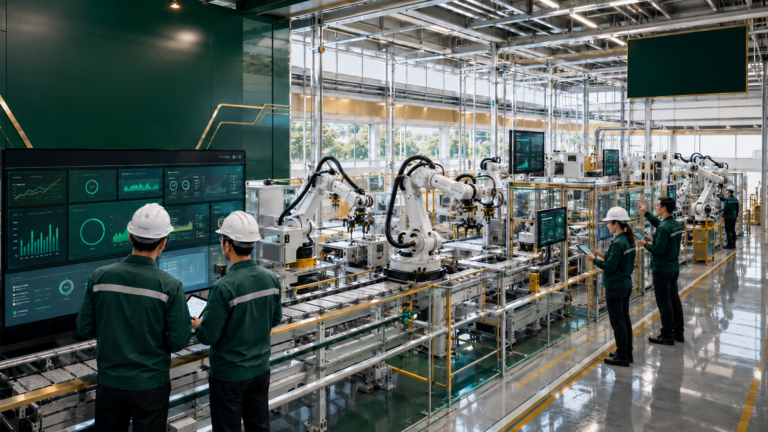
What a Smart Factory in Thailand Really Means
A smart factory uses automation, artificial intelligence, robotics, and real-time data to run production with minimal manual control. Machines talk to each other, sensors track every process, and software adjusts output as orders arrive. In practice, this means fewer errors, faster cycles, and tighter quality control.
However, the technology is only half the story. A connected plant generates vast amounts of data, relies on imported machinery, and reshapes the workforce. Therefore, each layer carries a legal dimension that foreign investors should understand from the outset. Thailand has positioned this transition at the heart of its “Thailand 4.0” industrial policy, and the regulatory framework has shifted to match.
Factory Licensing Still Applies to a Smart Factory in Thailand
Automation does not remove the duty to obtain a factory licence. The Factory Act B.E. 2535 (1992), administered by the Department of Industrial Works, still governs where and how you operate. The Act classifies factories by machinery power and workforce size, and larger operations must hold a licence before production starts.
Crucially, a smart factory often concentrates more horsepower into a smaller footprint. As a result, your machinery list, layout, and pollution controls must still satisfy the regulator. Our guide to the Factory Act in Thailand sets out the categories and obligations, while our overview of industrial plant layout in Thailand explains how the physical design feeds the licence application.
BOI Incentives for Building a Smart Factory in Thailand
This is where Thailand becomes genuinely attractive. The Board of Investment (BOI) refreshed its promotion measures on 15 January 2026, and smart industry sits at the centre of the new package. Most measures accept applications from the first working day of 2026 through the last working day of 2027. The table below summarises the routes most relevant to manufacturers.
| Incentive route | What it offers (qualifying projects) |
|---|---|
| Technology upgrade measure (smart and sustainable industry) | Existing manufacturers that invest in automation, AI, or digital systems can receive additional corporate income tax (CIT) exemption, commonly three years, plus duty relief on new machinery. |
| Productivity enhancement for SMEs | CIT exemption of up to five years, capped at the value of the qualifying investment in automation, machinery, or digital technology. |
| New S-curve activities | Automation systems, advanced robotics, AI, and data centres now qualify as promoted activities, with their own tax holidays. |
| Training and expense deductions | Enhanced deductions, in some cases up to 200%, for qualifying automation, software, and workforce training expenditure. |
| EEC stacking | Projects in the Eastern Economic Corridor can combine BOI promotion with EEC-specific benefits for a stronger overall package. |
Exact percentages and conditions vary by activity and project size, so the figures above are indicative rather than fixed. Nonetheless, the direction is clear. For a fuller picture of how promotion works, see our guide to BOI manufacturing in Thailand, and confirm eligibility before you commit capital. Software and IT that you integrate with machinery to control production usually qualify too, which directly supports a connected, data-driven plant.
Employment Law: Automation, Reskilling, and Section 121
Robots change the workforce, and Thai labour law treats that change seriously. When an employer introduces machinery or technology that reduces the number of employees, the Labour Protection Act B.E. 2541 imposes specific duties. Under Section 121, the employer must give the Labour Inspector and affected staff at least 60 days’ advance notice, or pay in lieu.
Moreover, employees with six or more years of service may be entitled to additional special severance on top of ordinary severance. Consequently, an automation rollout needs a careful workforce plan, not just an engineering plan. Many foreign manufacturers instead reskill staff to operate the new systems, which reduces redundancy exposure and builds capability. Our guide to severance pay in Thailand explains how these calculations work in practice.
Data, Connectivity, and Cybersecurity
A smart factory runs on data, and that data is regulated. Sensors, access systems, and HR platforms often capture personal information, which brings the Personal Data Protection Act (PDPA) into play. As a result, you need a lawful basis to collect employee and visitor data, clear retention rules, and proper security.
In addition, connected machinery widens your cybersecurity exposure. A breach can halt production or leak commercial secrets. Therefore, prudent operators build data governance and incident-response measures into the project from day one, rather than bolting them on later.
A Practical Roadmap for Foreign Manufacturers
A smart factory project moves more smoothly when legal and technical work run in parallel. In broad terms, the sequence looks like this:
- Structure first. Choose the right entity and confirm BOI eligibility before importing machinery.
- License the operation. Secure the factory licence and align the layout with your automation plan.
- Plan the workforce. Map reskilling and any Section 121 obligations early.
- Govern the data. Build PDPA compliance and cybersecurity into procurement and system design.
- Capture the incentives. File BOI applications within the promotion window to maximise tax relief.
Because these steps interlock, a misstep in one area can delay the others. A coordinated advisory approach keeps the project on schedule and protects the investment.
Frequently Asked Questions
Do I still need a factory licence for a smart factory in Thailand?
What BOI incentives support smart factory investment?
How does automation affect my employees under Thai law?
Does the PDPA apply to a connected factory?
Can SMEs access smart factory incentives, or only large investors?
Planning a Smart Factory in Thailand?
From BOI promotion and factory licensing to employment and data compliance, a smart factory touches every part of Thai law. Lex Bangkok guides foreign manufacturers and investors through each step with premium, commercially focused advice. Partner with a team that keeps your project compliant and on schedule.
Schedule a Consultation延伸阅读 / Related guide: 泰国建厂完整指南 — Factory Setup in Thailand for Chinese Manufacturers.