

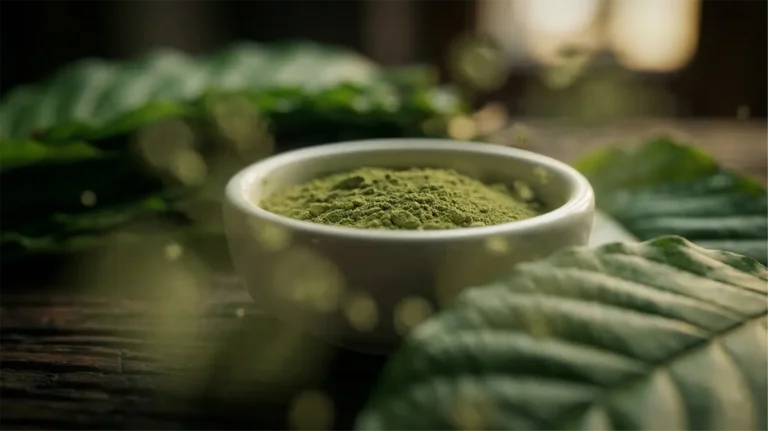
Understanding kratom laws in Thailand is essential for anyone looking to do business in this growing market. Thailand has undergone a dramatic shift in its approach to kratom (Mitragyna speciosa). Once classified as a Category 5 narcotic carrying severe criminal penalties, kratom is now a fully legal, regulated commodity with growing commercial potential. For businesses and individuals looking to enter the Thai kratom market, understanding the current legal framework is essential.
This guide covers everything you need to know about kratom laws in Thailand in 2025, including the latest FDA regulations, import and export licensing, product compliance standards, and penalties for violations.

A Brief History of Kratom Regulation in Thailand
Kratom has deep roots in Thai culture, traditionally chewed by laborers and farmers for its stimulant properties. However, Thailand first restricted kratom use in 1943 through the Kratom Act, which prohibited planting new kratom trees and ordered the destruction of existing ones. In 1979, kratom was reclassified as a Schedule 5 substance under the Narcotics Act B.E. 2522, making possession, sale, and consumption criminal offenses punishable by imprisonment.
The turning point came in 2021 when the Thai government removed kratom from the narcotics list entirely. This paved the way for the Kratom Plant Act B.E. 2565 (2022), which established a comprehensive regulatory framework allowing kratom to be legally cultivated, traded, imported, exported, and consumed in Thailand.
Kratom Laws in Thailand: Current Legal Status (2025)
As of 2025, kratom is fully legal in Thailand. The Kratom Plant Act governs all aspects of kratom commerce, while the Ministry of Public Health oversees product safety standards through the Thai FDA. The Ministry of Justice, through the Office of the Narcotics Control Board (ONCB), manages import and export licensing.
Key points about the current legal status include:
- Personal use — Individuals can legally possess, consume, and grow kratom plants for personal use without a license.
- Commercial sale — Businesses may sell kratom products provided they comply with Thai FDA regulations and hold the required licenses.
- Food and herbal products — The Thai FDA has approved kratom as an ingredient in food supplements and herbal products, subject to strict manufacturing and labeling standards.
- Import and export — Cross-border trade in kratom leaves requires a license from the ONCB under the 2025 Ministerial Regulation.
Thai FDA Regulations for Kratom Products (2024 Guidelines)
On September 4, 2024, the Thai FDA issued updated guidelines governing the use of kratom in food supplements and herbal products. These regulations provide a clear compliance framework for businesses entering the kratom market.
Dosage Limits
For powdered kratom leaves, the maximum allowable dosage is 0.2 mg of mitragynine per day. Water-based kratom extracts are limited to 1 mg of mitragynine per day. The addition of 7-hydroxymitragynine to any food supplement is strictly prohibited.
Raw Material Standards
Powdered kratom leaves must contain at least 1% mitragynine by mass as a quality marker. All raw materials must meet Thai FDA purity and safety standards before being used in commercial products.
Labeling Requirements
Product labels must include clear warnings that kratom should not be consumed continuously for more than seven days. Labels must also warn against combining kratom with alcohol or other kratom products. Failure to comply with labeling requirements can result in product recalls and fines.
Manufacturing Standards
All manufacturing facilities producing kratom-containing dietary supplements and herbal products must comply with GMP standards as defined under the Ministry of Public Health Announcement No. 420 (2020). Businesses seeking to obtain a factory license in Thailand for kratom production should ensure full compliance with these requirements.

Import and Export Licensing: 2025 Ministerial Regulation
The most significant recent development is the Ministerial Regulation on the Importation and Exportation of Kratom Leaves B.E. 2568 (2025). This regulation defines “kratom leaves” as fresh or dried leaves in their natural, unprocessed state and establishes clear rules for cross-border trade.
Who Can Apply for a License?
- Thai nationals aged 20 or older who are residents of Thailand
- Juristic persons registered under Thai law, with Thai nationals comprising at least two-thirds of directors and shareholders
- Community enterprises registered under Thai law
- Government agencies
Foreign investors looking to participate in the kratom trade will typically need to register a company in Thailand that meets the ownership requirements. This is a critical step that requires careful legal structuring.
License Details
- Application — Filed through the ONCB e-licensing portal
- Processing time — Approximately 30 business days
- Fee — THB 5,000 per license (import or export)
- Validity — Five years from the date of issuance
- Shipment notification — Each shipment requires pre-clearance at least 7 business days before import or export through the National Single Window system
Required Documents
Applicants must provide identity verification, company incorporation documents, facility floor plans identifying storage areas, a 12-month import or export forecast with volumes and destinations, and a purpose statement explaining how the activities align with the Kratom Plant Act.
Penalties for Noncompliance
Even though kratom laws in Thailand now permit legal trade, operating outside the regulatory framework carries serious consequences. Importing or exporting kratom leaves without a valid ONCB license is a criminal offense. Failing to submit shipment notifications constitutes a separate violation that can result in administrative fines and license suspension.
For kratom food products, selling items that do not meet Thai FDA labeling or GMP standards can lead to product seizure, mandatory recalls, and fines. Repeat violations may result in permanent license revocation.
It is strongly recommended that businesses engage a qualified legal advisor to review all contracts, agreements, and compliance procedures before entering the kratom market.

Business Opportunities in Thailand's Kratom Market
Thanks to the evolving kratom laws in Thailand, the regulated market presents significant commercial opportunities. The number of approved kratom products remains relatively low, indicating substantial room for growth. Businesses can now legally cultivate, produce, and sell kratom products if they adhere to the regulatory standards set by the Thai FDA.
Key market opportunities include kratom-based food supplements, herbal beverages, traditional wellness products, and export of raw kratom leaves to countries where kratom is legal. The five-year license validity period and electronic filing system provide operational certainty for compliant businesses.
For foreign entrepreneurs, the first step is typically to set up a Thai company with the correct ownership structure. From there, businesses will need to secure the appropriate FDA registrations and ONCB licenses depending on their intended activities.
How Lex Bangkok Can Help
Navigating Thailand’s kratom regulations requires specialized legal knowledge spanning corporate law, FDA compliance, licensing procedures, and cross-border trade rules. At Lex Bangkok, our team of licensed Thai lawyers provides end-to-end legal support for businesses entering the kratom industry.
Our services include company registration and structuring for foreign investors, FDA product registration and compliance review, ONCB import and export license applications, contract drafting for supply chain and distribution agreements, and ongoing regulatory advisory as laws continue to evolve.
Ready to enter Thailand’s kratom market?
Contact Lex Bangkok today for a consultation with our legal team. We help you navigate the regulatory landscape so you can focus on building your business.