

What the Sunscreen Rules in Thailand Actually Cover
The sunscreen rules in Thailand target four substances commonly found in sun-care formulas. The Department of National Parks, Wildlife and Plant Conservation (DNP) prohibits any cosmetic containing these ingredients from being used in, or brought into, any national park:
- Oxybenzone (benzophenone-3), a common chemical UV filter;
- Octinoxate (ethylhexyl methoxycinnamate), another widely used UV filter;
- 4-Methylbenzylidene camphor (4-MBC), a UV filter; and
- Butylparaben, typically used as a preservative or fragrance component.
The measure took effect on 4 August 2021 and applies across all of Thailand’s national parks, both land-based and marine. The legal basis sits in Section 20 of the National Park Act B.E. 2562 (2019), which empowers the Department of National Parks Director-General to set rules that visitors must follow. Anyone who breaches the ban can face a fine of up to 100,000 baht.
Why Thailand Introduced the Restriction
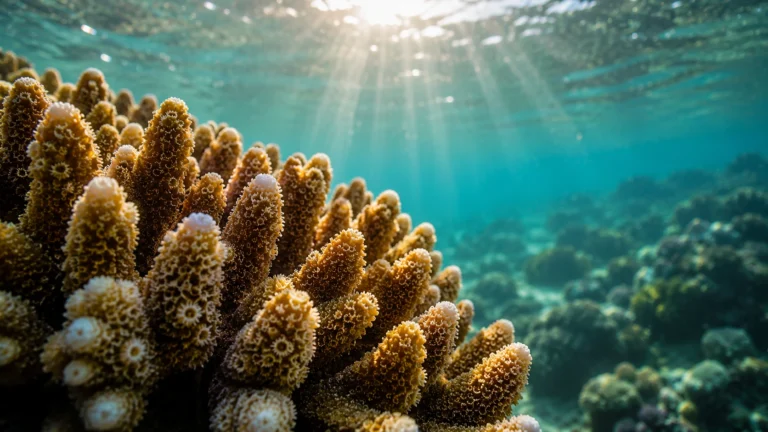
Thailand’s motivation is environmental. Scientific studies have linked the four banned ingredients to coral damage, including coral bleaching, disruption of coral reproduction, and harm to coral larvae. Because Thailand’s marine parks draw millions of visitors each year, even trace amounts of these compounds washing off swimmers can accumulate on sensitive reefs.
As a result, the DNP frames the rule as reef and marine-ecosystem protection rather than consumer safety. This distinction matters commercially. The authorities are not questioning whether these ingredients are safe on skin; they are limiting where products containing them may be used. Consequently, enforcement focuses on the point of entry to a park, not on retail shelves nationwide.
Clearing Up the Octocrylene Myth
A persistent claim suggests that Thailand reduced the allowable octocrylene concentration in aerosol sunscreens, for example from 10% to 9%, under a cosmetics notification. That claim does not hold up. Octocrylene is not one of the four ingredients restricted in national parks, and Thai regulators have not published any octocrylene concentration cut. Businesses should therefore avoid reformulating a Thailand-only product against a limit that does not exist.
The confusion likely stems from a genuine but entirely separate development abroad. In the European Union, the European Chemicals Agency (ECHA) opened a public consultation on 24 September 2025 on a proposed restriction of octocrylene under the REACH Regulation, with the consultation period running to 24 March 2026. The proposal, driven by concerns about environmental persistence and octocrylene’s potential to degrade into benzophenone, would restrict octocrylene at very low concentrations. Importantly, this remains an EU proposal moving through the EU process. It is not Thai law, and Thailand has announced no equivalent measure.
Thailand’s Park Ban vs. the EU Octocrylene Proposal
| Feature | Thailand national-park ban | EU octocrylene proposal |
|---|---|---|
| Legal status | In force since August 2021 | Proposal under ECHA/REACH consultation |
| Ingredients | Oxybenzone, octinoxate, 4-MBC, butylparaben | Octocrylene |
| Scope | Use and entry inside national parks | Placing on the EU market (if adopted) |
| Authority | Department of National Parks (DNP) | European Chemicals Agency (ECHA) |
| Sanction | Fine up to 100,000 baht | To be determined if adopted |
What the Sunscreen Rules in Thailand Mean for Businesses
Although the rule sits under environmental law rather than product regulation, its commercial reach is wide. Several categories of business should pay close attention.
Cosmetic brands and manufacturers
Brands that market sun-care products for beach, island, or reef use should check their formulas against the four restricted ingredients. Many international sunscreen lines still rely on oxybenzone or octinoxate, so a product that is fully compliant for general retail may nonetheless be prohibited inside a park. Reformulating toward mineral filters, such as zinc oxide or titanium dioxide, is one common response.
Importers and distributors
Importers should map which products in their portfolio are likely to be used in coastal and marine destinations. Product claims also carry legal weight. Terms such as “reef safe” or “reef friendly” must be accurate and substantiated, because misleading environmental claims can attract separate scrutiny under Thai consumer-protection and cosmetic advertising rules. Imported sun-care lines must also clear standard customs and import requirements before reaching the shelf.
Hotels, resorts, and tour operators
Hospitality businesses near national parks increasingly guide guests toward compliant products. Some provide reef-friendly sunscreen or display notices about the ban. These steps reduce the risk of guests being fined and support a resort’s own sustainability positioning. Operators of spas and aesthetic services should also align product sourcing with the wider beauty and wellness compliance framework in Thailand.
Practical Compliance Steps
To manage the risk efficiently, businesses can take a few concrete measures.
- Audit formulas: confirm whether any product contains oxybenzone, octinoxate, 4-MBC, or butylparaben, and flag those intended for coastal or marine markets.
- Review labeling: ensure that “reef safe” or similar claims are genuinely supported and consistent with the four-ingredient standard the DNP promotes.
- Segment the range: consider a park-compliant, mineral-filter line for beach and island channels, separate from mass-market products.
- Track the EU proposal: if the same formula or supply chain also serves EU markets, monitor the ECHA octocrylene consultation as a distinct deadline.
- Document decisions: keep records of formula reviews and substantiation for green claims, which support both regulatory defense and brand trust.
Frequently Asked Questions
Did Thailand cut the octocrylene concentration allowed in aerosol sunscreens?
Which sunscreen ingredients are banned in Thailand’s national parks?
Is the sunscreen ban in Thailand a nationwide product ban?
What is the penalty for breaching the ban?
How should brands selling in both Thailand and the EU respond?
Related reading: concentration can decide the regime. See how 5,000 ppm fluoride toothpaste in Thailand moved from cosmetic notification to full drug registration.
Navigating Thailand’s Cosmetic and Environmental Rules?
Lex Bangkok advises international cosmetic brands, importers, and hospitality groups on product compliance, Thai FDA notification, labeling and green-claim substantiation, and environmental regulation. Our lawyers help you bring sun-care and beauty products to the Thai market with confidence.
Schedule a ConsultationThis article is provided for general information only and does not constitute legal advice. Regulatory requirements and enforcement practice may change, and the EU octocrylene measure referenced here remains a proposal under consultation. Businesses should obtain professional advice before making compliance or reformulation decisions.